
WeatherPlus Projects
HNT Reservoir Operation Support System Helps Hydropower Plant Successfully Respond to 5,000-Year Flood
20/02/2026

Share
At the peak of the 2025 storm season, inflow into Ban Ve reservoir reached 12,800 m³/s at one point, exceeding the check flood level corresponding to a 0.02% exceedance probability – roughly a once-in-5,000-year event. Under this extreme situation, the application of modern forecasting and operation technology enabled the reservoir to proactively pass the flood safely.
Hydropower reservoir overcomes 5,000-year flood with technology
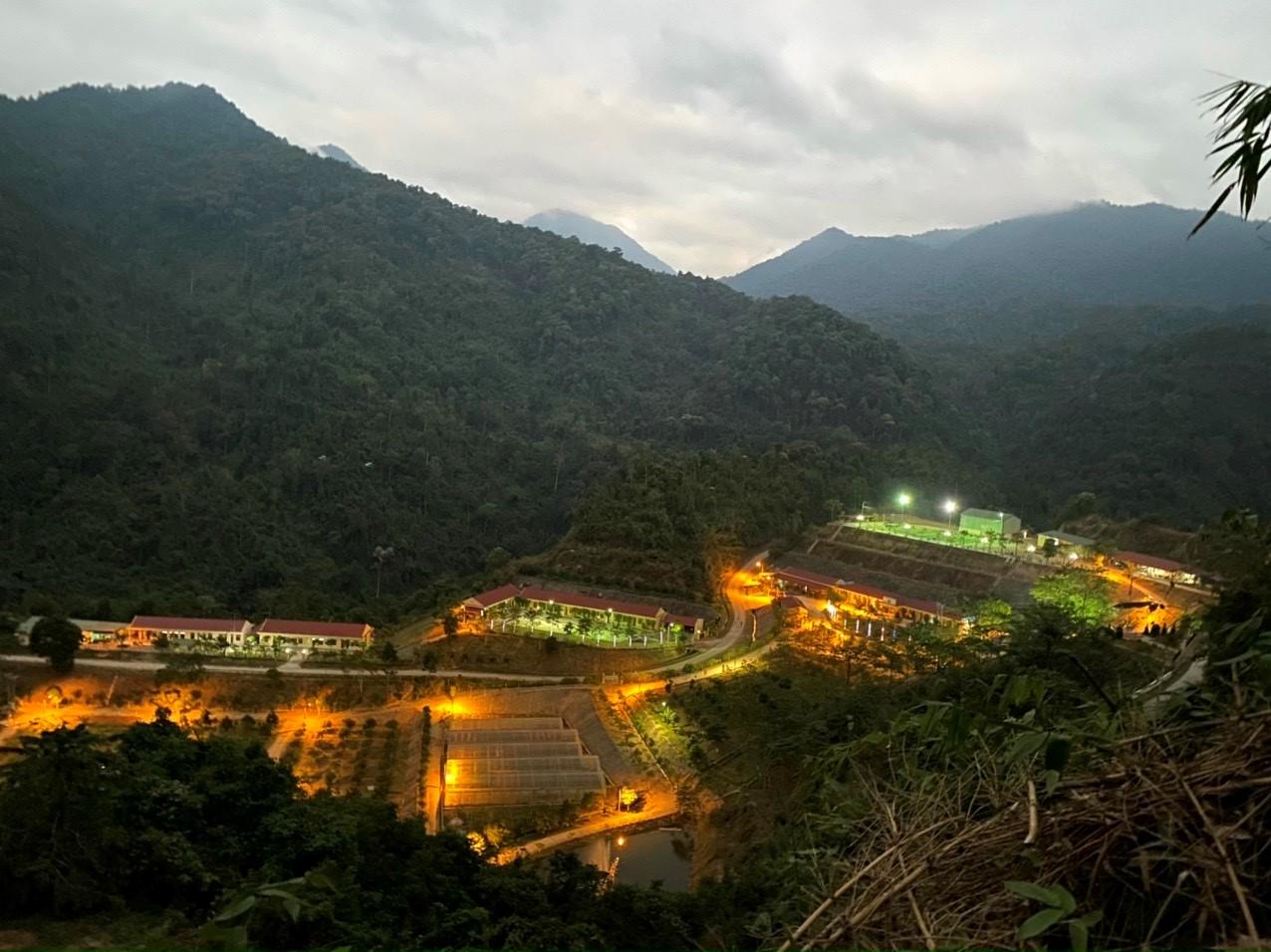
At the peak of the 2025 storm season, when typhoons Wipha and Kajiki successively struck North Central Vietnam, the Ban Ve Hydropower Plant (Nghe An) entered one of the most stressful periods of its operation.
At dawn on 23 July, the water inflow into the reservoir reached 12,800 m³/s, exceeding the check flood level of the Ban Ve Hydropower Plant, which is 10,500 m³/s.
According to hydrological calculations, a check flood level of 10,500 m³/s corresponds to a 0.02% exceedance probability – meaning it occurs roughly once every 5,000 years. The smaller the probability, the rarer the event and the longer the return period. Therefore, the fact that the actual inflow exceeded even the check flood level shows that Ban Ve reservoir faced one of the most extreme events.
Shortly afterward, Typhoon Kajiki continued to cause heavy to very heavy rainfall, commonly 150–300 mm, and nearly 500 mm in some places.
In this context, Ban Ve not only operated safely but also proactively lowered the reservoir water level early, expanding its storage capacity to receive floodwater. Thanks to reasonable operation, the plant cut the flood peak flow by about 74%, safeguarding the downstream hydropower plants and downstream areas.
The key factor enabling the operations team to make early and accurate decisions is no longer just experience, but rainfall and inflow forecast information continuously updated from the HNT (Hydropower New Technology) Reservoir Operation Support System, developed by WeatherPlus Weather Solutions Joint Stock Company in cooperation with Kyushu Electric Power of Japan.
A year earlier, Typhoon Yagi in 2024 also became a major test of forecasting and flood regulation capabilities.
In the Ky Cung river basin (Lang Son), the Thac Xang Hydropower Plant faced the largest peak flow since it began operation. Under conditions of intense rainfall and rapid developments, the plants still operated absolutely safely, fully complied with procedures, and caused no incidents or risks for downstream areas.
The difference lies in the fact that lowering the reservoir level and opening storage capacity to receive floodwater no longer relies purely on intuition. Decisions are based on basin-scale forecasts, inflow hydrographs to the reservoir, and operation scenarios updated in real time. Operators can "see ahead" what will happen in the next several dozen hours, rather than only reacting after the rain has fallen and the water has already reached the reservoir.
These cases show that, in an increasingly extreme climate, the boundary between safety and risk for a reservoir increasingly depends on forecasting capability and early preparation. And it is precisely at this point that technology is beginning to become a new line of defense for the hydropower system.
This reality is proof of the capabilities of Vietnamese enterprises and of products created with Vietnamese intelligence, designed, controlled and developed by Vietnamese people.
It is no coincidence that WeatherPlus's HNT Reservoir Operation Support System was awarded the Outstanding Digital Product, Service and Solution prize at the Vietnam Digital Transformation Awards 2025, and also won the Gold Award for Make in Vietnam 2025 in the Potential Digital Product category.
These awards recognize the practical value of a solution that has been proven in the largest flood and rain situations in recent years.

Pressure behind the door of the hydropower control room during flood season
In an increasingly unpredictable climate, hydropower reservoirs are under greater pressure than ever. Hydropower not only ensures dam safety and power generation, but also serves as an important line of defense in flood cutting and reducing damage to downstream areas.
Many years of practice show that a major limitation of plants is the lack of detailed basin-scale forecast data. Operators often have to estimate rather than calculate. Monitoring data is fragmented and poorly interconnected. When information arrives later than actual developments, every decision becomes riskier.
Reservoir operation is therefore not only a technical problem but also a social responsibility problem. Every flood discharge decision is linked to the safety of people and downstream infrastructure. Releasing water too early may cause unnecessary damage, while releasing too late may threaten dam safety. Psychological pressure weighs heavily on the operations team during peak flood hours.
The fundamental difference of HNT compared with traditional approaches is shifting the focus from providing data to supporting decisions.
The system integrates meteorological and hydrological data, basin-based runoff modeling, and continuously updates possible scenarios over the coming hours and days.
Operators not only know how much rain is falling now, but also see the inflow hydrograph to the reservoir, the water level that may be reached, and the consequences of each release option.
Through deployment at more than 50 reservoirs and hydropower plants, HNT has gradually formed a new operating approach: based on data, scenarios and quantitative risk assessment, instead of intuition and pure experience.
This very change creates the foundation for the teams at the Ban Ve and Thac Xang Hydropower Plants to make decisions earlier and more confidently during the harshest flood periods.
Digital data enters the critical moments of reservoir operation
Compared with traditional operation, HNT directly addresses the core limitations in reservoir management.

First is the problem of "information blindness" at the basin level. Instead of relying only on broad-scale rainfall forecasts, HNT builds detailed hydrological models for each basin and sub-basin, combining on-site monitoring data with modern meteorological forecasts. Rainfall is "translated" into specific runoff flowing into the reservoir, helping operators visualize the scale and timing of the flood peak.
Second is the limitation in response time. Older models typically only indicate decisions after rain has already fallen and water levels are rising rapidly, narrowing the room for regulation. HNT allows operators to look ahead many hours, even many days, creating a "time buffer" to proactively lower the water level and open storage capacity early. This proactiveness is a key factor enabling reservoirs such as Ban Ve or those in the Ky Cung river basin to significantly cut flood peaks.
Third is overcoming the fragmentation of data. Previously, rainfall, water level and flow information were stored in many different systems and updated asynchronously. HNT integrates everything into a single, unified real-time visual platform, giving operators an overall view of the reservoir's "risk picture."
Finally is the issue of psychology and responsibility. When decisions rely heavily on personal experience, the pressure on operators is very high. HNT does not replace people, but provides a scientific basis so that every decision can be explained by data and scenarios, reducing subjective risk.
These new features make HNT not just forecasting software, but a true decision support system. Technology becomes a "member" of the management board, weighing options alongside the operators.
It is precisely this tailored approach, turning data into valuable information for decisions, that helps hydropower move from a passive position to actively managing risk in a future climate that is increasingly uncertain.